
- Biscuit Cake
- Calippo
- Cone
- Cup
- Family Size
- Popsicle
- Premium
Ice Cream
- Drinkable
- Panna Cotta
- Pudding
Dessert



Strawberry Verrine: A Delicious Layered Dessert Strawberry verrine is an appealing combination of panna cotta, strawberry jelly, strawberry cream, and crispy sablé dough. With its […]
Read More

Berry Chia Pudding — A Healthy and Delicious Dessert with a Fresh Taste If you’re looking for a healthy, tasty, and nourishing dessert that works […]
Read More

Sticky Toffee Banana Pudding — A Warm and Irresistible Dessert for Sweet Moments Sticky toffee banana pudding is an exciting combination of ripe banana flavor, […]
Read More

St. Mor Sundae — A Delicious Mix of Biscuit, Marshmallow, and Ice Cream If you’re looking for a tasty and unique dessert that brings together crunchy, […]
Read More
From ancient times until today… whenever the name traditional Iranian ice cream comes up, we instantly think of the aroma of rosewater, the golden color of saffron, and that stretchy layer of cream mixed with fresh pistachios — a combination where every spoonful feels like pure joy. This cool, delicious treat carries a fascinating history, one that has traveled a long path from the distant past to the present. In this article, we’re going to explore the sweet and delightful story of traditional Iranian ice cream — from its earliest origins to today — and discover what has made this dessert so beloved by everyone.
Long ago, before ice cream existed in its modern form, people made refreshing desserts by mixing snow with fruit syrups. This was mostly done in regions where natural snow and ice were available. For example, in the mountains around Hamedan, people used snow to prepare these cool treats and enjoyed them on hot summer days.
The story of ice cream entering Iran begins in the reign of Naser al-Din Shah Qajar. During one of his trips to Europe, he discovered ice cream and decided to bring this delicious dessert back to Iran. At first, ice cream was reserved for the royal court, but gradually it found its way into the markets and everyday life of ordinary people. That was when Iranian cooks got creative and, by adding beloved local flavors like saffron, rosewater, and cardamom, created what we now know as traditional Iranian ice cream.
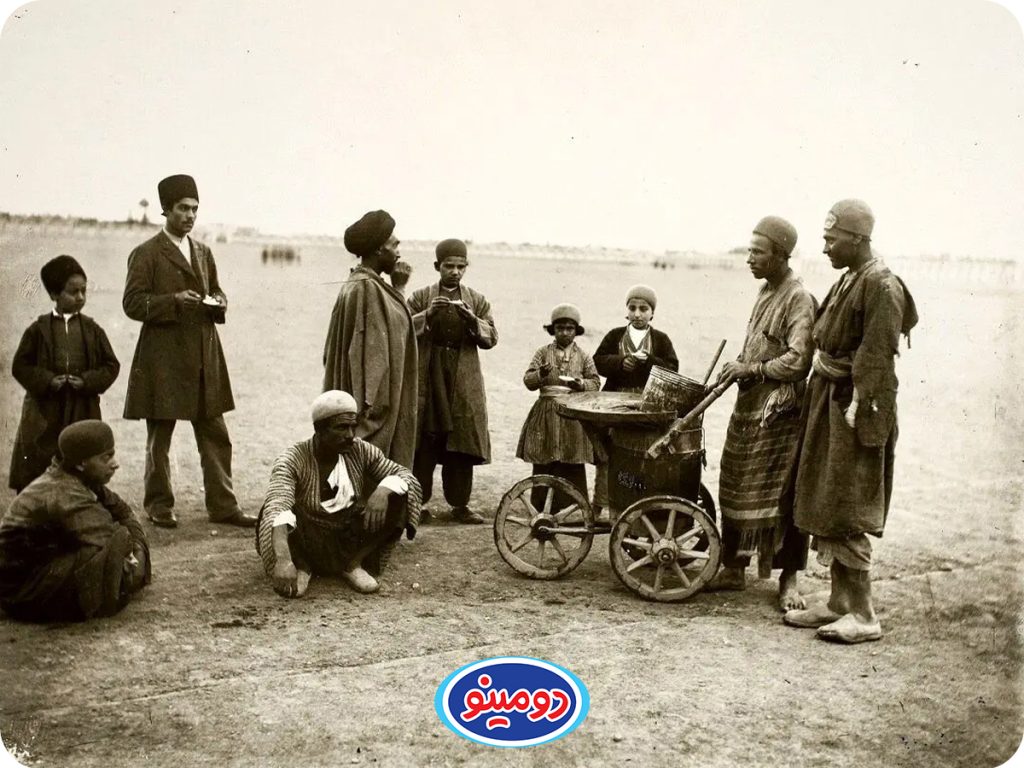
One of the most interesting chapters in the history of traditional Iranian ice cream is the story of Mammad Rish and his apprentice Akbar Mashti. Mammad Rish used to make ice cream in the royal kitchen of Mozaffar ad-Din Shah, and after the fall of the Qajar dynasty, Akbar Mashti opened the first public ice‑cream shop in Tehran. His saffron ice cream — with its stretchy cream and fresh pistachios — became so popular that even politicians and foreign visitors were among his regular customers.
However, there’s an important point to keep in mind about the stories of Mammad Rish and Akbar Mashti: there are still no reliable historical documents confirming these tales. Most of what is known about them comes from oral history — stories passed down from person to person over the years until they reached us today.
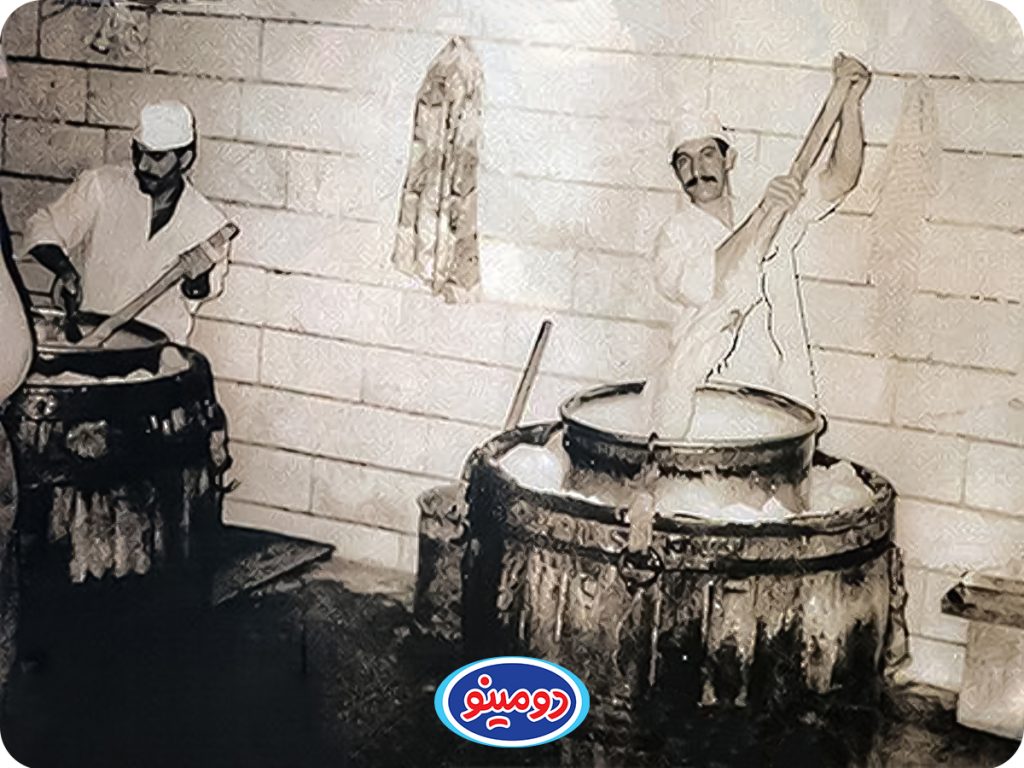
During the Pahlavi period, industrial ice‑cream production entered Iran, and large‑scale manufacturing began with the help of modern machinery. Despite this shift toward industrial production, traditional ice cream kept its special place, and people continued to value its authentic, natural flavor.
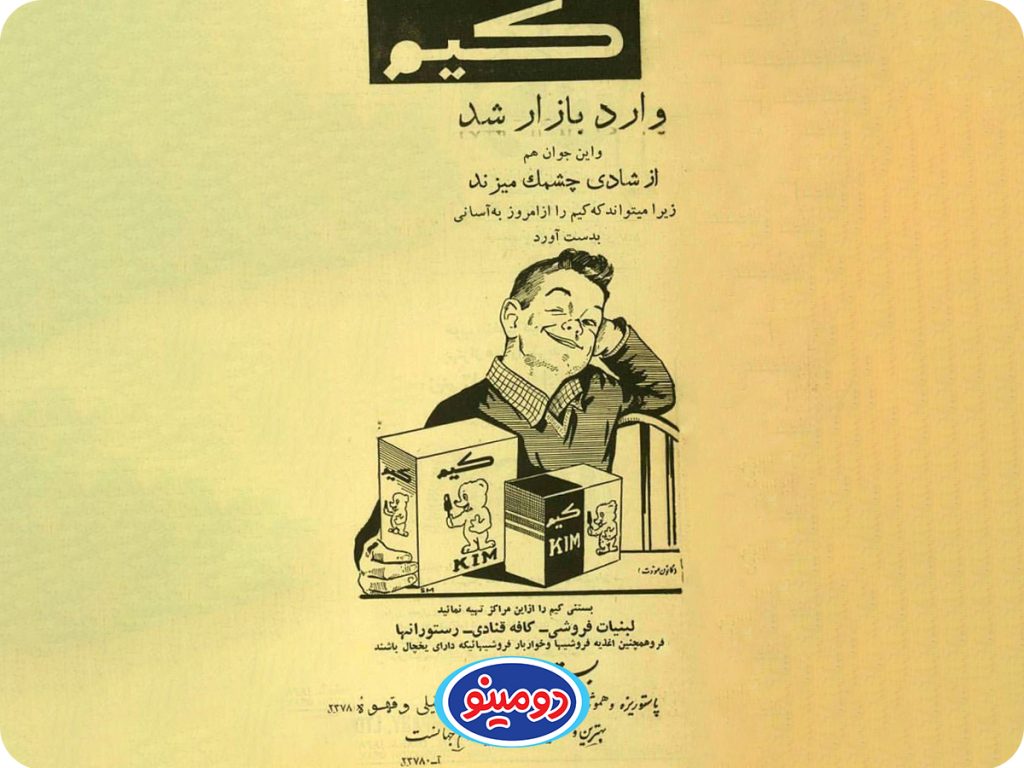
One of the things that sets traditional Iranian ice cream apart from other types is the use of natural, authentic Iranian ingredients. These include:
There was a time when ice‑cream making was done entirely by hand. The ingredients were poured into a metal container, which was then placed inside a wooden barrel filled with ice and salt. Workers stirred the mixture with wooden paddles until it slowly turned into ice cream. The process took a long time and required serious arm strength.
Back then, before refrigerators and machines existed, ice was brought from the mountains north of Tehran and used to make ice cream. Saffron and rosewater were also prepared using traditional methods to preserve the authentic flavor. Today, advanced machines make the production process much faster and easier. Still, many local ice‑cream makers continue to use traditional techniques to maintain the original taste and quality.
One of the most famous old ice‑cream shops in Tehran was Akbar Mashti’s shop on Rey Street. People from all over the city would line up to taste his delicious, stretchy saffron ice cream. Some customers even brought flasks to take the ice cream with them to faraway places.
Today, traditional Iranian ice cream is no longer loved only in Iran. Iranians living abroad have introduced this delightful dessert to the world, and you can now find it in cities like Los Angeles, Paris, and Dubai.
Made with natural ingredients like saffron and rosewater, it offers a unique taste you won’t find anywhere else.
For many of us, this ice cream brings back childhood memories and hot summer days — moments spent with family or friends in front of an ice‑cream shop.
Since traditional ice cream contains no preservatives or artificial additives, it’s a healthier and tastier choice.
1. Why is saffron so important in traditional ice cream? Because it gives the ice cream its special aroma and flavor, along with a beautiful golden color that Iranians love.
2. Is traditional ice cream suitable for everyone? Yes — but those who are lactose‑intolerant should choose lactose‑free versions.
3. Can traditional ice cream be made at home? Yes, but you’ll need high‑quality ingredients and an ice‑cream maker. It takes some time, but the result is amazing.
4. When is the best time to eat traditional ice cream? On hot summer days — or anytime you crave an authentic, special flavor.
Traditional Iranian ice cream is more than just a dessert; it’s a piece of this land’s history and culture. Every spoonful takes you on a journey into the past — from the Qajar court to the old streets of Tehran.
So next time you’re craving something truly special, try a saffron traditional ice cream from Domino and enjoy every moment. 🍦✨

